Mosaic Research Frameworks
We seek to make health research more equitable, accountable, and impactful – partnering with governments, advocacy organizations, and funders to design the systems that get us there.

Our Work
Mosaic Research Frameworks helps government bodies, nonprofit organizations, and private philanthropies build more resilient systems for the public good.We author white papers and Request For Proposal templates, offer speaking engagements, and organize convenings on:
Principles and practical standards for open and rigorous research
Governance structures that protect research from political overreach
Engagement of relevant communities
Incentives for collaborative translational research
Effective health and science communication efforts
The future of social and behavioral sciences research – specific expertise areas include health communication, public health, neuroscience, psychology, and emerging technology
Writings & Happenings
Documenting the Dismantling
Article — Up Close and Personal with the Trump Administration's NIH Funding Cuts: An Interview with Sylvia Chou and Alexa Romberg — The Scholarly Kitchen, September 2026
Podcast — The Bethesda Declaration: NIH Scientists Speak Out Against Political Interference — Libsyn, June 2026
Radio — Listen to Former NIH Staff Discuss the Dismantling of U.S. Scientific Enterprise — Substack, June 2026
Article — The 3-pronged attack on scientific communication — Inside Higher Ed, June 2026
Article — The Future of Online Misinformation Research: Tackling the Landscape With Integrity and Urgency — JMIR, June 2026
Report — Addiction Science Under Siege: 2025 Impact Report — Addiction Science Defense Network / National Prevention Science Coalition, May 2026
News — Six federal scientists run out by Trump talk about the work left undone — CNN, March 2026
News — The people — and research — lost in the NIH exodus — CNN, March 2026
Article — The NIH has lost its scientific integrity. So we left — STAT News, January 2026
Article — 'A whole body of health-equity research is being disappeared' — why I resigned from the NIH — Nature, August 2025
The Path Forward
Article — Toward the Reconstruction of US Research Infrastructure — Academe (AAUP), September 2026
Podcast — How scientists are fighting the Trump administration's attempts to silence them — Theory of Change with Matthew Sheffield, August 2026
Talk — From Dissent to Dialogue: The Bethesda Declaration and the Fight for Academic Freedom — UC Berkeley, August 2026
Talk — The Past, Present, and Future of Public Research Funding — University of Pennsylvania, May 2026
Talk — The future of public research funding for behavioral sciences — 27 UNIHTED, April 2026
Featured
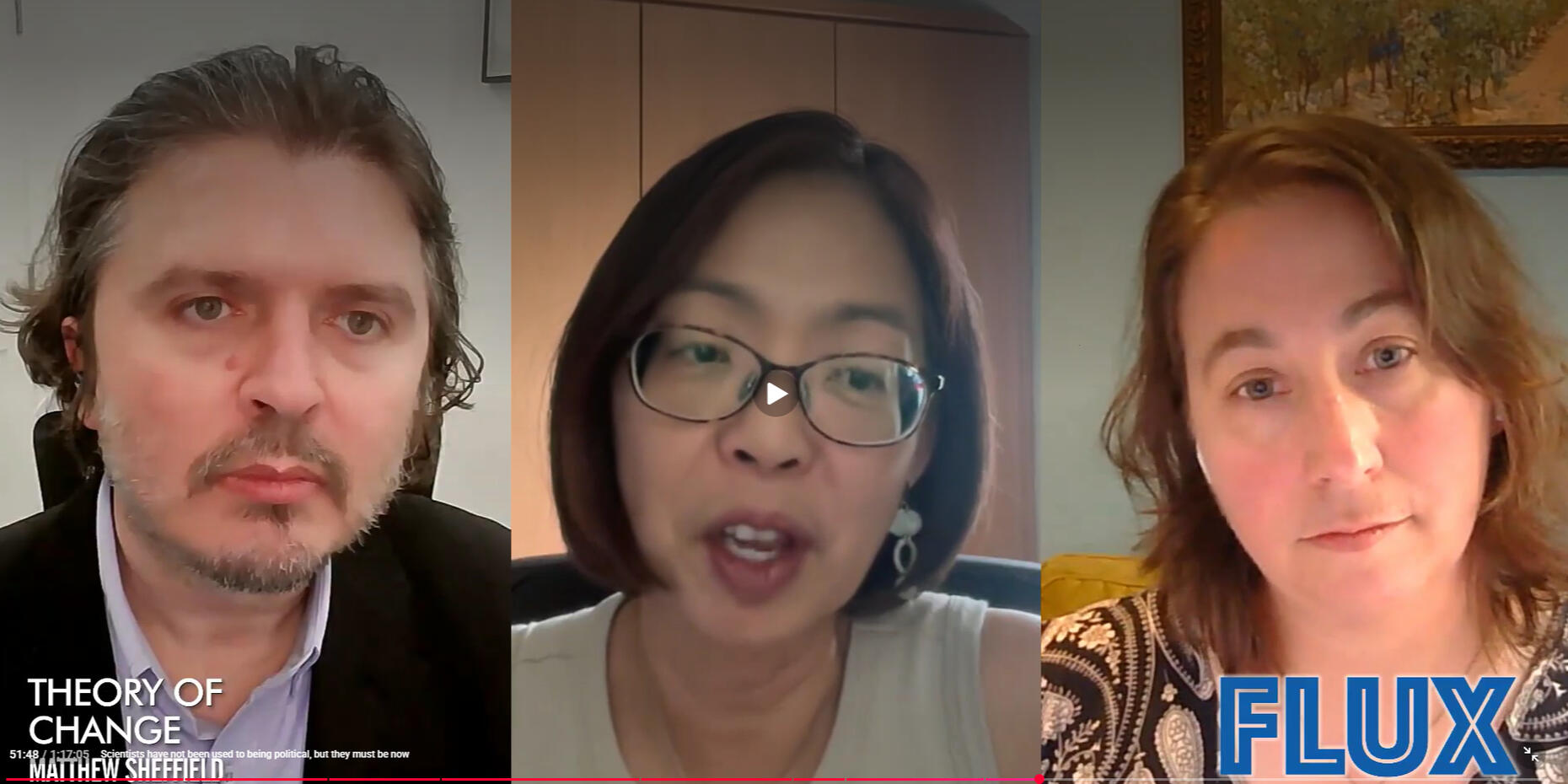
How Scientists Are Fighting the Trump Administration's Attempts to Silence Them.
Sylvia and Alexa join the Theory of Change podcast to discuss the Bethesda Declaration, scientific integrity, and what comes next.
Who We Are
We are former NIH staff with expertise in mental and behavioral health and health communication, and are named signers of The Bethesda Declaration, which called attention to the harms done at the NIH. With over 30 years of scientific and administrative experience, we bring expertise in designing and funding complex health research programs. We believe bold thought leadership is needed to rebuild our scientific enterprise.
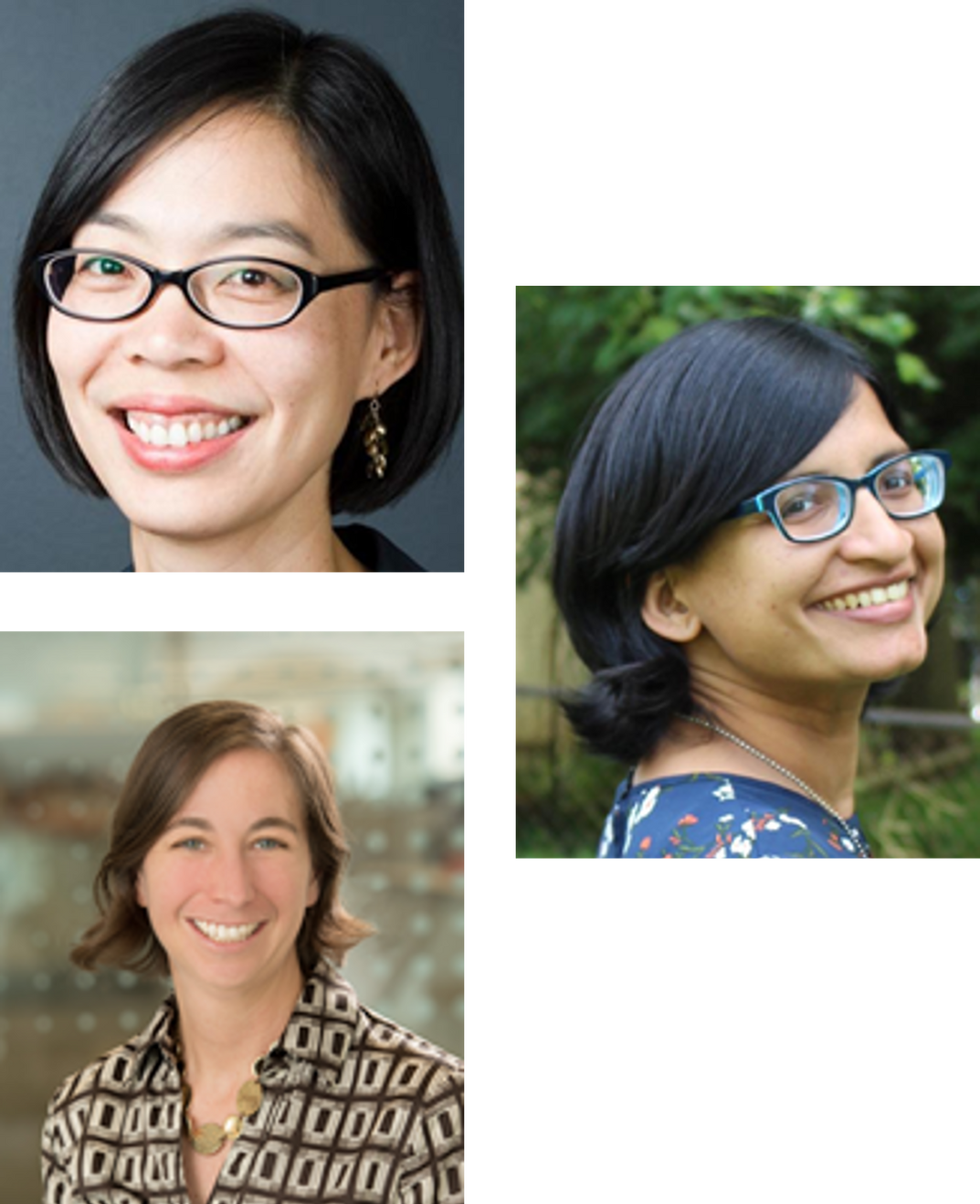
Wen-Ying Sylvia Chou, PhD, MPH
Sylvia is a prolific health communication scholar with over 125 publications with expertise in social media, misinformation, and patient-provider communication. She served as a Program Director at the National Cancer Institute for 16 years, overseeing a funding portfolio on social media and digital health. After leaving the NIH, she has continued to organize efforts for the integrity of academic research. Sylvia holds a M.S. and Ph.D. in Linguistics from Georgetown University, a Master in Public Health from UC Berkeley. She is a Visiting Scholar at the Annenberg School for Communication at the University of Pennsylvania. Starting on September 1, she will be a Shorenstein Center Fellow at the Harvard Kennedy School, joining a cohort of leaders from media, technology, politics, public policy, and related fields.
Vani Pariyadath, PhD
Vani is a cognitive neuroscientist specializing in neuroimaging and computational approaches. She brings 15 years of NIH experience, most recently as Chief of the Behavioral and Cognitive Neuroscience Branch at the National Institute on Drug Abuse. She now serves as Executive Director of the International Brain Laboratory. Vani holds a Ph.D. in Neuroscience from Baylor College of Medicine, a master’s degree in Cognitive Science from the University of Allahabad, and a bachelor's degree in Computer Science from the University of Pune.
Alexa Romberg, PhD
Alexa is a behavioral scientist with expertise across laboratory and applied domains. She served as the Deputy Chief of the Prevention Research Branch within the National Institute on Drug Abuse, managing portfolios in translation between basic and applied substance use prevention research, tobacco and cannabis prevention and countermarketing, and health equity. She has worked previously at the University of Maryland and Truth Initiative. Alexa earned her bachelor’s degree in Molecular Biophysics & Biochemistry from Yale University and her Ph.D. in Psychology from the University of Wisconsin – Madison.
Contact Us